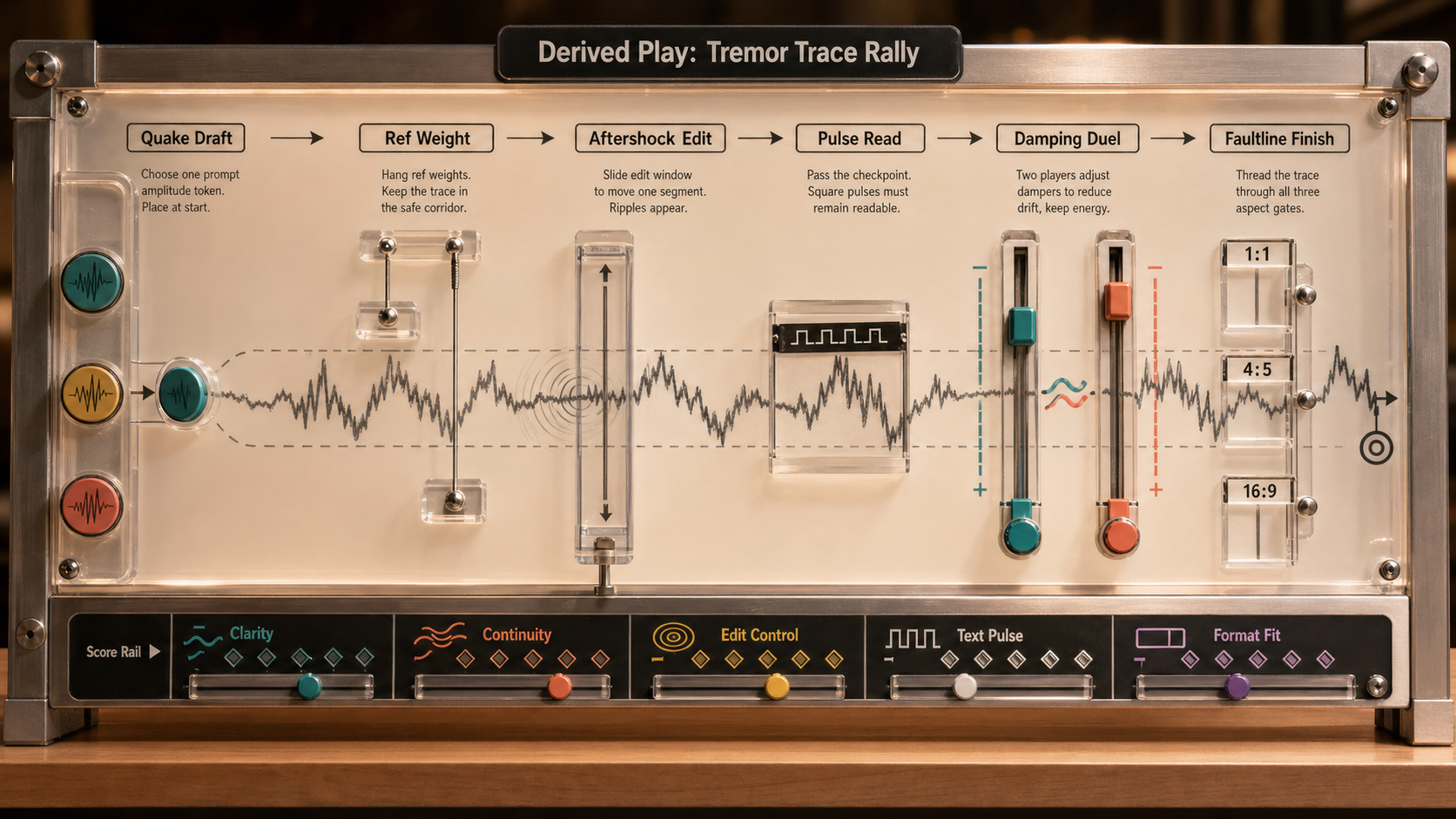
Create one original GPT Image 2 derived-play concept image as a 16:9 landscape scene.

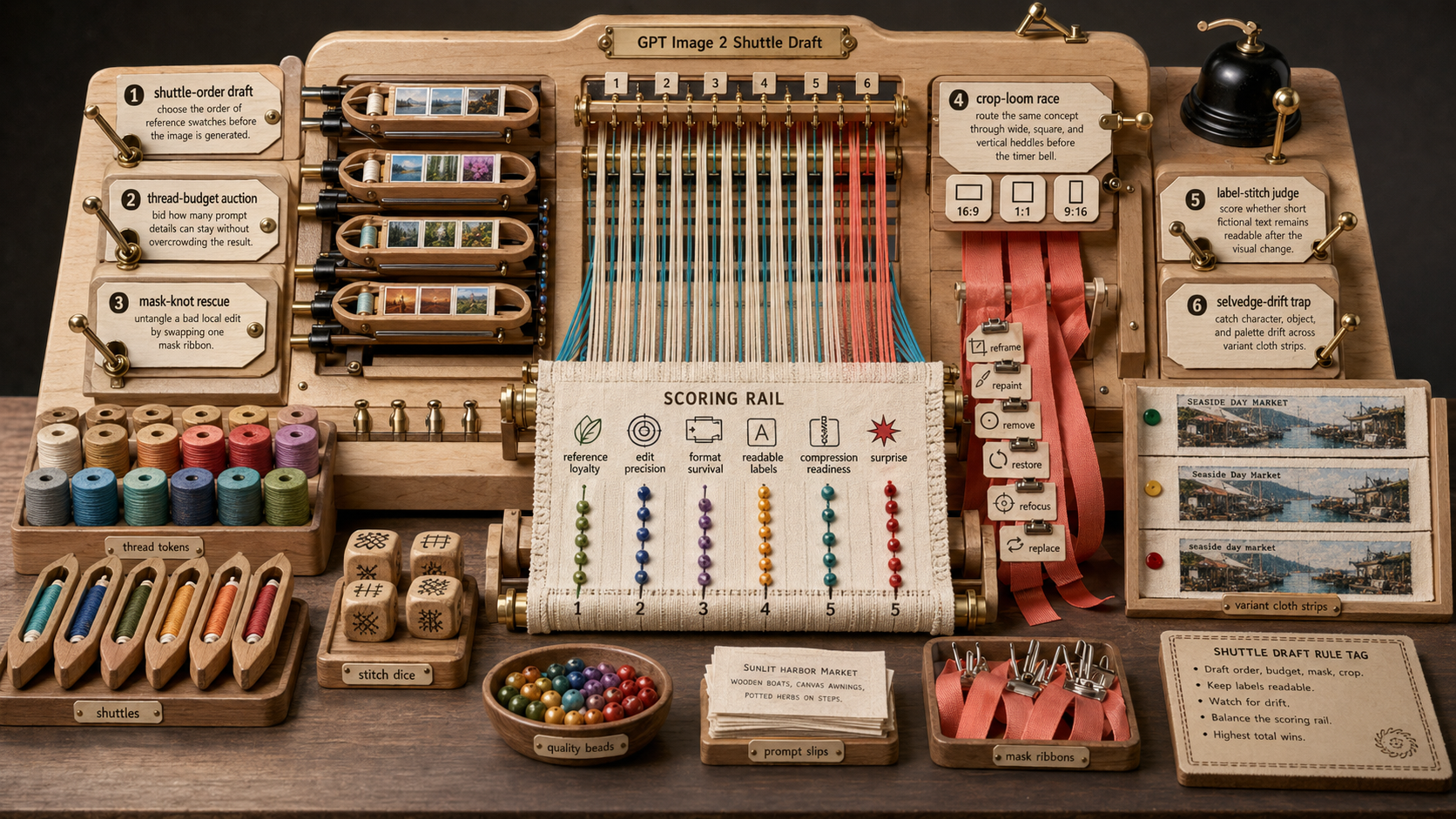
Title inside the image, small and legible: "GPT Image 2 Shuttle Draft".

Core format: a playable upright loom game derived from the Reference Loom idea. It is a single freestanding craft-game apparatus with moving shuttles, thread tokens, mask ribbons, crop heddles, label needles, quality beads, and a woven scoring cloth. Do not make a contact sheet, not a 2x3 grid, not separate cards, not a circular rules machine, not pinball, not a film stage, not a greenhouse, not a weather station, not a tabletop route game, not a transparent-background demo.

Six original play mechanics shown as labels on physical levers, thread paths, and scoring cloth:
1. "shuttle-order draft" players choose the order of reference swatches before the image is generated.
2. "thread-budget auction" players bid how many prompt details can stay without overcrowding the result.
3. "mask-knot rescue" players untangle a bad local edit by swapping one mask ribbon.
4. "crop-loom race" players route the same concept through wide, square, and vertical heddles before the timer bell.
5. "label-stitch judge" players score whether short fictional text remains readable after the visual change.
6. "selvedge-drift trap" players catch character, object, and palette drift across variant cloth strips.

Scoring rail: reference loyalty, edit precision, format survival, readable labels, compression readiness, surprise. Include tiny wooden shuttles, colored thread spools, abstract dice with stitch icons, quality beads, fictional prompt slips, mask ribbon clips, and a concise rule tag. All names, sample products, places, UI screens, and characters are invented.

Visual language: elegant craft-game product photography; maple loom, brass hardware, cotton threads, ivory cloth, cyan guide strings, coral edit ribbons, graphite labels, black timer bell, small colored beads. Keep labels short and readable.

Safety and originality constraints: no real brands, no trademarks, no celebrities, no public figures, no copyrighted characters, no living artist style imitation, no political persuasion, no elections, no party symbols, no harmful or illegal instructions, no sexual content, no nudity, no explicit content, no graphic violence, no gore, no blood, no weapons, no watermark.

Composition: low frontal three-quarter view with the whole loom visible. The six mechanics must be integrated into one continuous playable loom, not boxed panels. The image should feel like a tactile game for learning GPT Image 2 reference control, masking, format adaptation, and output proofing.